
If you have any news to share about births and deaths, or if you have written a book or composed a piece of music you think our community would be interested in, please send it to zephyr@inayatiyya.org with the subject heading “News of the Caravan.” Photos are welcome.
A Farmer’s Thoughts – The Gift of Compost
By Wali Via
When life is experienced as a living and loving whole, one’s relationship to life and the Earth changes. We call the Earth our Mother, for we are nurtured by all that she provides. We receive her gifts. But do we offer gifts in return?
Farmers are often attracted to their occupation because farming offers the opportunity for an intimacy with the soil, plants, animals, and wildlife that comprise a farm. But it is easy for a farmer’s attention to become consumed with production, markets and the complexities of running a farm, and lose sight of one’s sacred relationship with the farm and the Earth. When a farmer is conscious of being part of the organism of the farm and not just a manager of it, then gifting simply happens in the natural flow of the work.
Composting is one way of giving back. To offer compost to the soil one participates willingly in the full circle of giving and receiving. It is a gift of love.
Mother Nature composts all the time through the processes of dying and decomposition. Soil microbes eagerly turn raw organic matter into fertile humus. Farmers use the same principles to create compost. But farm compost piles don’t happen without human involvement. It is a choice, a commitment, and a creative act.
Throughout my life I have viewed compost as a spiritual teacher. Compost has taught me how Life is in constant change. As a particular lifeform “dies” a host of organisms step in to consume it, transforming its life into other lives. Life never dies, it simply transforms. Bodies may disappear but Life remains. Witnessing this through the compost pile changed my relationship to dying. My physical body may no longer be, but Life’s essence continues endlessly. Physical death is not something to fear if one is willing to accept transformation.
Composting is an alchemical process. What society dubs as wastes are transformed into something so precious, that the lead into gold analogy is an understatement. God is the great alchemist. We are God’s apprentices.
My mother was an artist. She said that her teachers instructed her to know her materials, her paints, inks, charcoal, and pastels. The same holds true for the materials a farmer brings to be composted. What does it mean to “know” your compost ingredients? There is an analytical way of knowing through their chemical composition. But far more important is to “sense” the ingredients, to know their smell, their look, and their texture. Are they wet or dry? Green or brown?, Stinky or void of odor? How vital does their life force feel? Through the senses one develops a deeper relationship with each material, and that leads to a greater rapport with the compost. One’s intuition now leads the way in deciding how much of each ingredient to use and how to best to integrate it into the pile. Composting becomes more of an art than a science.
All of Life is a dance between the Elements of Earth, Water, Air, and Fire, and all enlivened by Ether. In composting there is an intensification of that dance. The Element of Earth is found in the raw ingredients, the manures, vegetative matter, and soil. The Element Earth provides the material structure of the pile.
These Earthly ingredients must contain Water in the right proportion, not too wet nor dry. The moisture of a lightly wrung out wet sponge is ideal. Water doesn’t drip out when you squeeze it, but it leaves moisture in your hand. This ratio of Earth to Water is an invitation to Life to flourish.
The compost pile is a living organism, and as a living being it must be able to breathe! Air infiltrates a pile through the pores between the material particles. If a pile is too wet, those pores are filled with water, and the pile cannot breathe. This is where beginning composters are most prone to fail, as the pile becomes anerobic.
Fire is not introduced to the pile through a farmer’s doing, rather heat is created by the metabolism of the unfathomable number of microorganisms that proliferate in a well-constructed compost pile. The temperature of compost needs to be monitored and regulated throughout the composting process. The pile heats up quickly in the first few days, usually to its maximum temperature. Temperatures between 130 and 145 degrees are ideal at this stage. Over 160 degrees and beneficial microorganisms are reduced in numbers. If the pile doesn’t heat up, either there isn’t a sufficient amount of material in the pile, or Earth, Water, and Air are out of balance with each other. As a pile ages the temperature declines. If a pile is turned the temperature will spike, putting the pile through an additional cycle of heating and cooling. Different organisms thrive at different temperatures. This variety brings a beneficial complexity to the finished compost. As the pile cools further fungal growth increases. Finished compost is a rich stable humus that shows no sign of the original ingredients. The alchemical transformation is complete.
Good composting methodology can be made even better by using biodynamic compost preparations. The biodynamic preparations were developed through the insights of Rudolf Steiner. He was able to see the inner workings of Nature and developed these preparations as healing remedies for the Earth. He indicated that eating food grown on soils treated with the preparations would assist humanity’s spiritual unfoldment.
Making and using the preparations, like compost, is a creative alchemical process that requires clear intention while embracing the wonder and mystery of the undertaking. They are made in accordance with specific celestial rhythms using yarrow, chamomile, stinging nettles, oak bark, and valerian.
It is important to understand that the value of the preparations does not come from adding material substance to the compost, for teaspoon quantities can treat up to 15 tons of compost. Rather they work by attracting and radiating spiritual forces through pile.
When the finished biodynamic compost is spread on the land it helps increase the sensitivity of the soil to the forces of the cosmos and brings an enlivened and balanced quality to the environment. Each preparation brings additional specific benefits, which is beyond the scope of this paper.
Working with compost and the biodynamic preparations are sacred acts. When approaching this work with gratitude and love in service to Mother Earth something marvelous transpires that is beyond any measurable material benefit. Every act of loving service sends out ripples into the Universe, and every ripple matters and leads us towards the fulfillment of our life’s purpose.
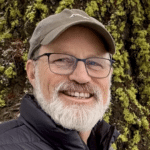 Wali David Via (Experienced Farmer and Ziraat Vice President 2021 – 2024) has been following the Sufi path since 1978 and serves a number of roles within the Inayatiyya, including as a past Dar-us-salem (Vice President) of Ziraat in North America/Oceania, retreat guide, and senior teacher. Wali spent his adult life farming organically and biodynamically on a commercial scale. He is now retired from farming, though the farm continues on in good hands (wintergreenfarm.com). He spends as much time as he can in the wilderness, hiking, backpacking, climbing mountains, and kayaking, and playing with his grandchildren. Wali is dedicated to providing opportunities for people to deepen their spiritual lives including their relationship with the natural world.